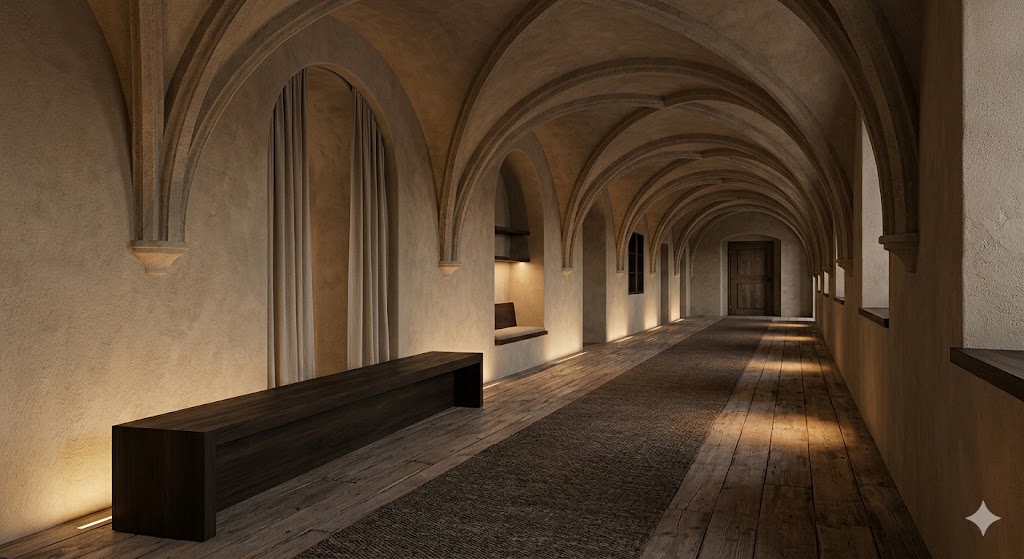
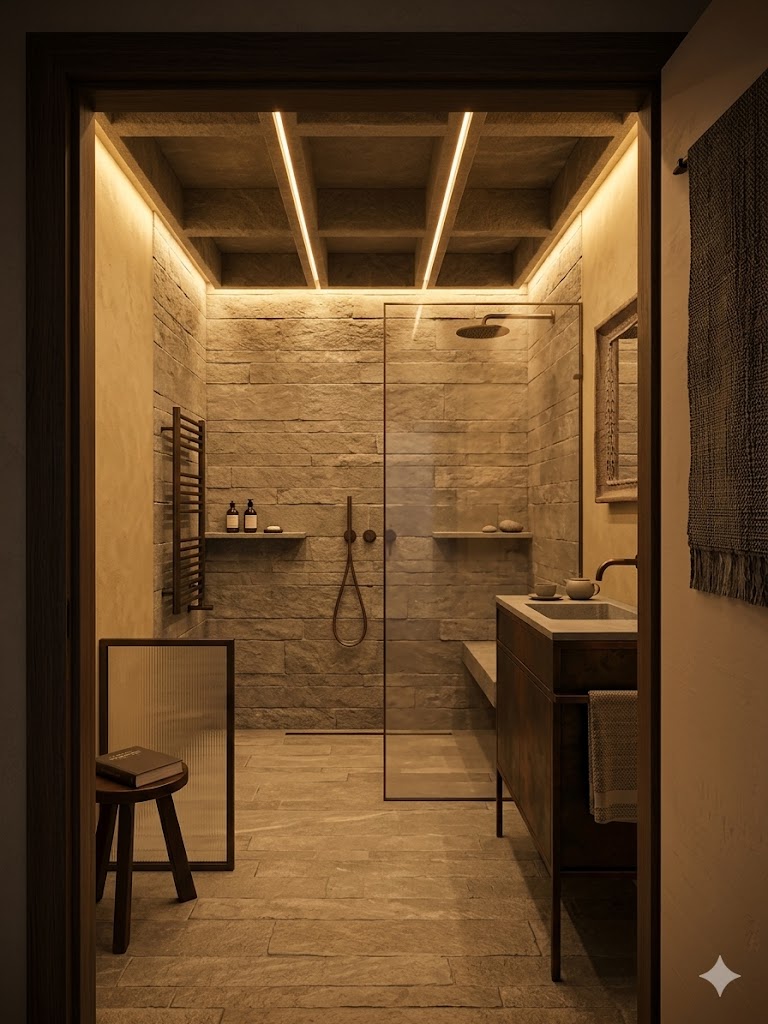
Hidden within the immense medieval structure of Neuberg Abbey, the former infirmary apartment remains unusually untouched by modern renovation. The vaulted ceilings, narrow proportions and monastic rhythm of the rooms survived centuries largely intact — partially because the abbey itself never experienced the large-scale Baroque transformations that reshaped many monasteries across Austria.
According to local folklore, Duke Ottokar — founder of the abbey — may once have sheltered fugitive Knights Templar in the valley after the dissolution of the order. The surrounding forests and isolation of Neuberg have long nourished stories of hidden chambers, lost manuscripts and even whispered speculation surrounding the Holy Grail itself.
“Rather than redesigning the apartment, the project imagines removing almost everything — allowing the silence of the Gothic shell itself to become the architecture.”
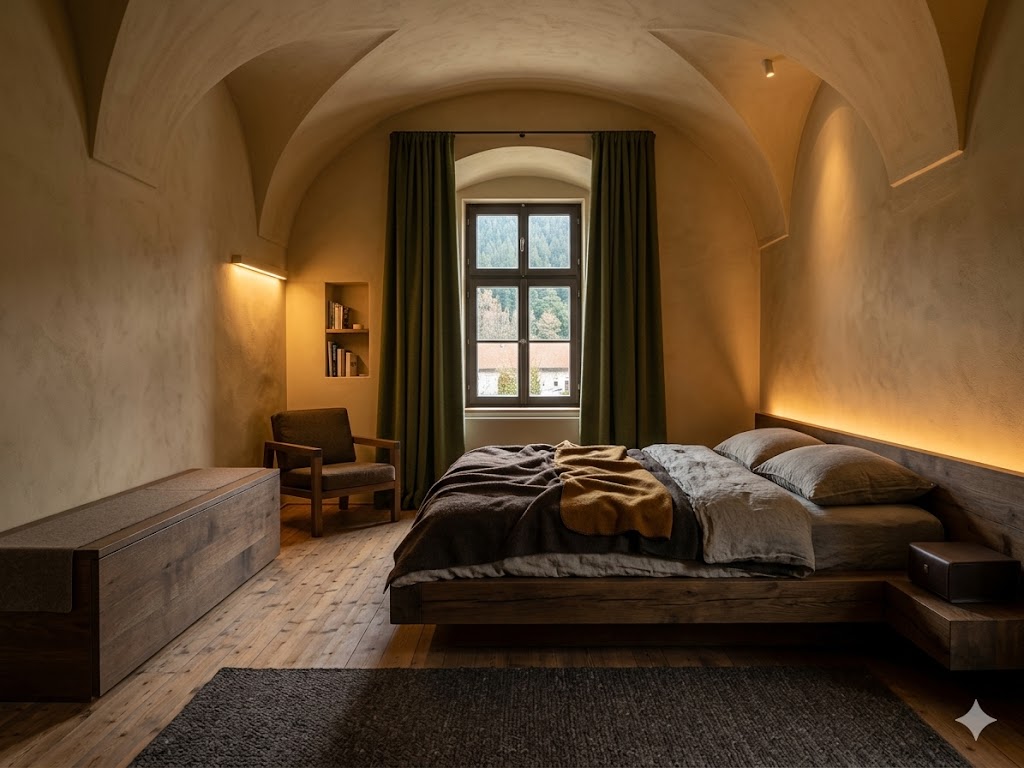
The bedroom embraces a restrained material palette of pale lime plaster, dark stained timber and heavy winter textiles. Integrated lighting softly washes the historic vaults without dramatizing them, creating an atmosphere that feels psychologically protective during long alpine winters.
The intervention deliberately avoids contemporary luxury language. There are no polished surfaces, decorative gestures or hotel references. Instead, warmth is created through tactility: linen curtains, solid oak furniture, aged timber flooring and indirect light that settles softly against the historic masonry.
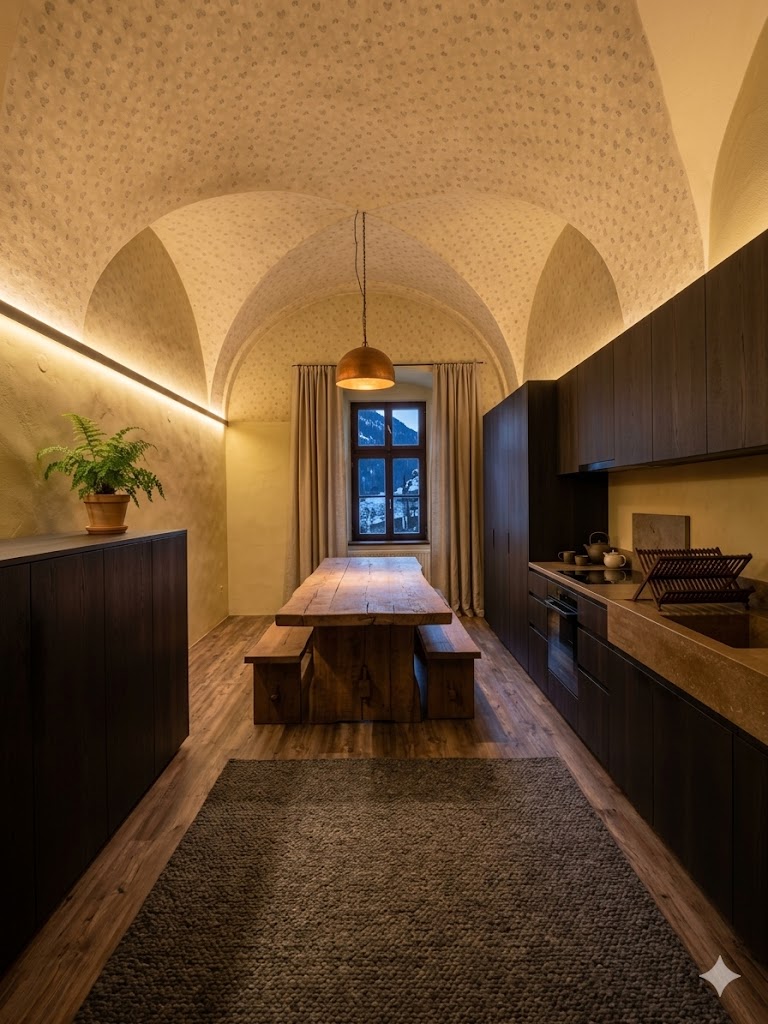
The kitchen functions less as a display space and more as a monastic gathering room. Existing proportions remain untouched while restrained cabinetry and a communal timber table reinforce the apartment’s quiet domestic rhythm.
Throughout the apartment, the original geometry becomes the primary decorative element. The Gothic vaults remain white and luminous rather than darkened into theatrical medievalism — a conscious decision intended to preserve lightness, reflection and calm.
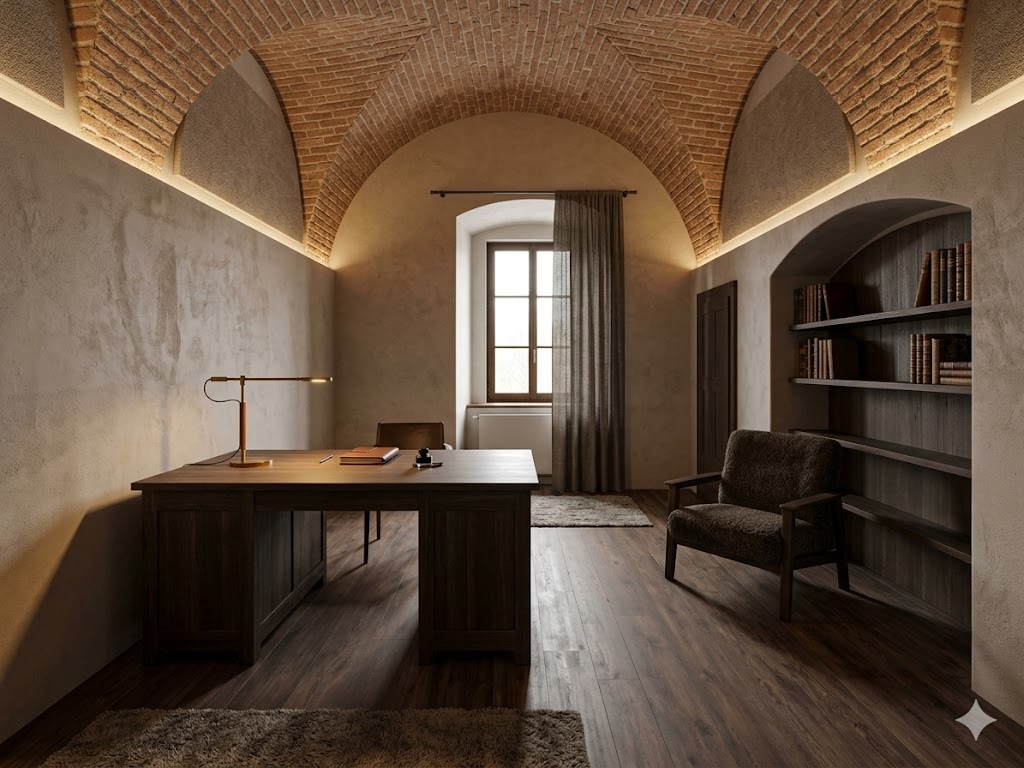
The workspace imagines the infirmary as an intellectual retreat — part library, part study, part winter observatory. Warm pools of reading light contrast against the cool alpine landscape outside.
The idea of retreat plays an essential role in the project narrative. Neuberg’s winters are long, silent and often severe. Rather than resisting this atmosphere, the interiors embrace enclosure, warmth and slowness. Rooms become places for reading, writing, conversation and recovery.